Human-centred AI for the people your clients trust
Your people are why clients trust you. AI is now entering the work they do.
The calls they make, the standards they hold. Ready or not.
“I sit with your experts while they do the thing they're trusted for — and I watch for the exact place AI would quietly wreck the standard they hold. That place is never on the slide. It's in the work.”
01 The work
Advantage here comes from expertise, relationships and judgement — not scale.
Generic AI advice commoditises the thing you're valued for.
The standard your experts hold is the first thing AI erodes, and most pilots don't notice until it's shipped. It rarely shows on a roadmap. It shows in the work.
AI amplifies what you already have.
Good process, and it scales the good at speed. Bad process, and it scales that just as fast. The expertise, relationships and judgement your people have built are the asset — I map where AI adds to them, and where it would quietly take from them.
Strategy at the top, real experiments underneath.
Opportunity and risk mapped with the people who decide; the grassroots experiments already happening across the business surfaced and given a path forward, so they lead somewhere instead of quietly festering; the frameworks that let your own people carry it.
I build the system. You run with it.
Focused advisory phases with a beginning, a middle and a definable end. The name on the work stays human, and you're left more capable than when I arrived.
02 How I work
Not a deck about your business. Time inside it.
the people trusted for the judgement — while they do the work, not in a workshop about it.
the exact place AI would weaken the standard they hold, before it's built into something that ships.
opportunity and risk with the people who decide — and surface the experiments already happening across the business.
every decision against verification, accountability and the rule that the name on the output stays human.
the frameworks and the way of working so your people run the system — and I'm not needed in the room to keep it working.
03 Thinking
Notes from the work — written to be forwarded.
Self-contained arguments, drawn from real engagements. Each stands on its own to a colleague who wasn't in the conversation.
The standard is never on the slide
Why the thing AI erodes first is the one thing your roadmap doesn't measure — and how to see it before it ships.
Read the note →The verifier problem
Everyone says “keep a human in the loop.” Almost no one checks whether that human can actually catch the mistake.
Read the note →The polish trap
AI made polishing almost free. That doesn't mean it was the right thing to do — a mistake that was mine.
Read the note →You built it for the ones who never needed convincing
One rollout plan, four audiences. Adoption is a leadership problem, not a tooling one.
Read the note →The hidden costs of AI
Most business cases count two costs. All eight are real — and the bill grows as you succeed.
Read the note →Tokenomics
Tokens feel free — which is exactly why cost is the blind spot. Input, output and the reasoning you can't see.
Read the note →04 Who this is for
You run a business where the expertise of your people is the product.
The worry is specific: that AI could quietly wear away the very thing that makes you worth hiring — the judgement, the standard, the trust your people built over years. You're past “should we do AI?” and into “how do we do this without losing what we're good at?”
You want to understand it yourself — not hand it to someone and hope.
05 Who I am

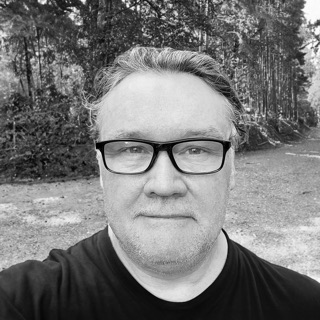
I've spent nearly two decades making technology work inside organisations that can't afford to get it wrong — leading global technology and operations at HSBC, then building a digital bank from scratch and taking it through to a UK banking licence.
What I've come to believe is that success isn't about having the most models or the flashiest demo. It is about knowing what to trust, what to verify and what to ship. I call this human-centred AI: designing AI around the people, expertise and accountability an organisation is trusted for, so it strengthens them rather than replacing them.
I work with four to six organisations a year — leaders who are past the hype and thinking about how to build something systematic, trusted and uniquely their own.
06 Education & speaking
I teach AI strategy, leadership and human-centred design.
Through Imperial College Business School, Kellogg School of Management and IDEO U. I also design courses for Kellogg and Emeritus, and speak at MIT xPRO.
07 Start
If this is live for you.
Send me the thing you can't get a straight answer on. I'll tell you whether I'm useful.
Email me